Ejina Poplar Forest
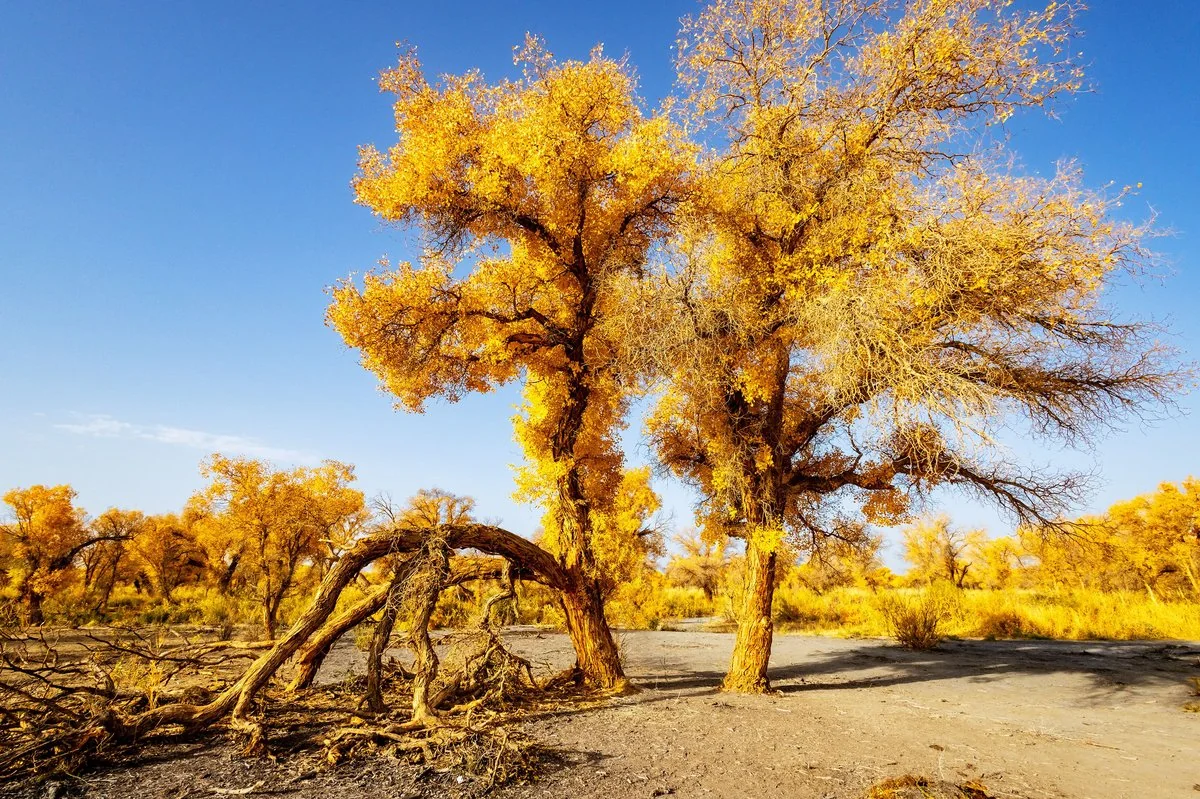
Golden desert poplar forests that blaze with color every autumn.
View DetailsAltay, Xinjiang Uygur Autonomous Region
Kanas Lake sits deep within the Altay Mountains, close to China's triple border with Kazakhstan, Mongolia and Russia, delivering jaw-dropping untouched alpine lake scenery you won't find crowded with tourists. Resting at 1,374 meters elevation, the crescent-shaped lake stretches 24 kilometers through untouched ancient forests and snow-capped mountain summits surrounding the entire basin. Its water shifts color constantly—swapping between turquoise, emerald, sapphire shades—changing based on sunlight angles and seasonal shifts year-round.
The lake's famous legendary “lake monster” draws curious travelers worldwide, described as a huge unidentified creature lurking deep in underwater trenches hidden below the surface. While the monster myth stays wrapped in mystery, Kanas' real magic lies in its pristine wilderness landscape: ancient Siberian larch and birch woods, wildflower carpeted meadows, glacial meltwater streams and permanent snow peaks lining every horizon.
Top spots worth carving time out for: Fish-Watching Pavilion for full panoramic lake views, Moon Bay and Wolong Bay unique rock formations lining the Kanas River, plus tiny nearby Tuva ethnic villages scattered across the hillsides. Local Tuva people, a Turkic-speaking ethnic group with ancient shaman customs, have lived in this remote mountain zone for hundreds of years without outside disruption. Autumn hits absolute peak visual beauty when larch forests turn brilliant golden yellow all over the mountains. A Finnish nature photographer traveled thousands of kilometers specifically to shoot Kanas' autumn golden woods, calling it one of Earth's most severely underrated fall foliage landscapes most tourists never hear about.
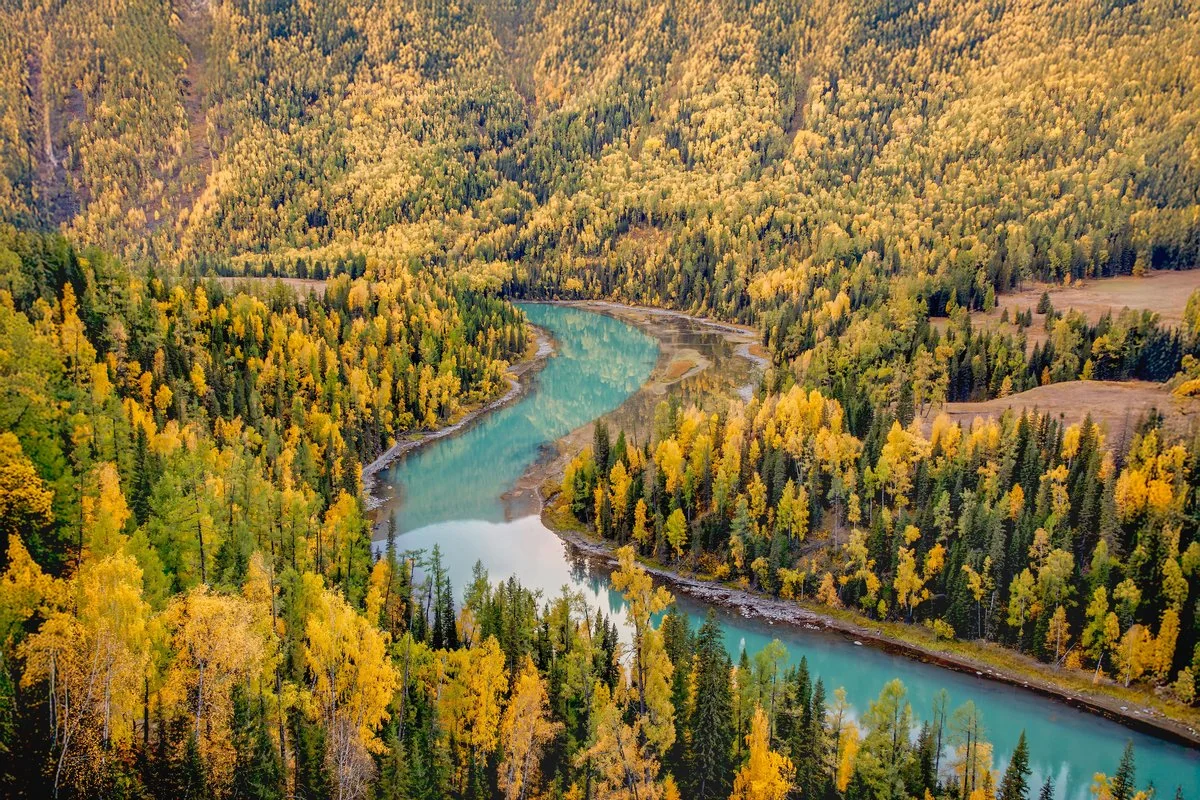
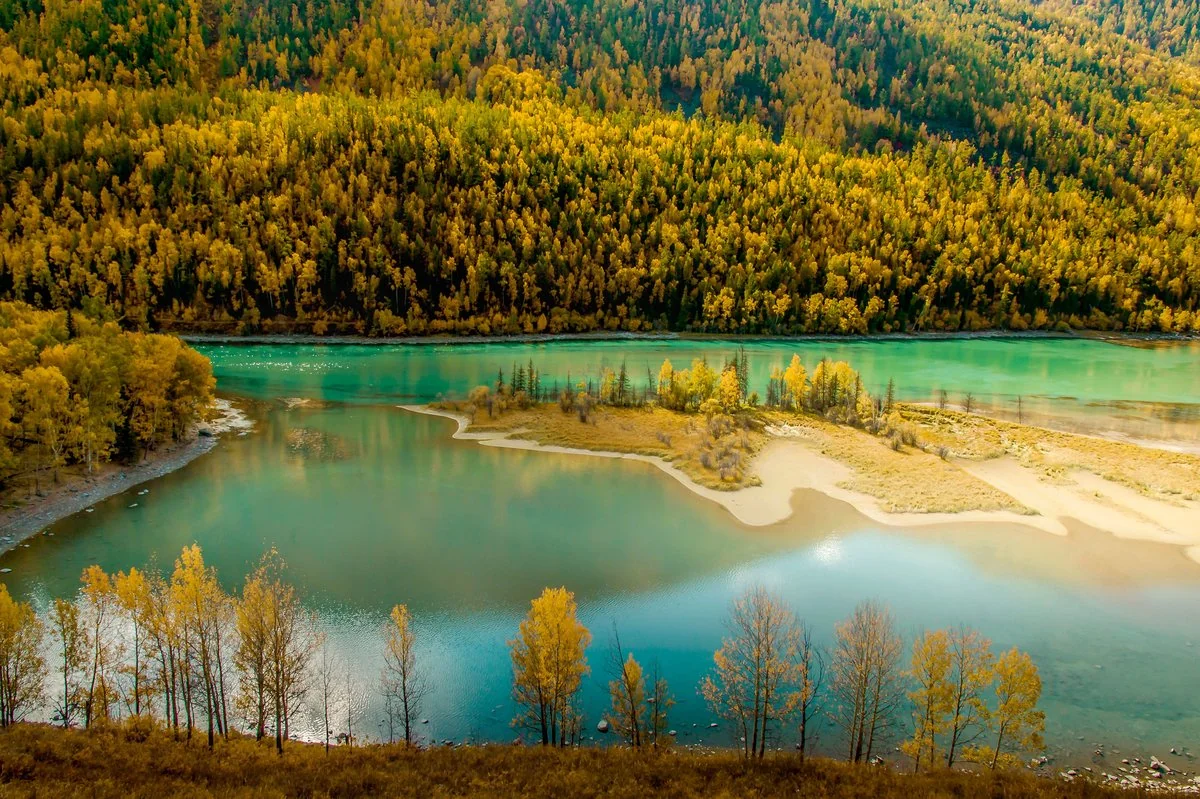
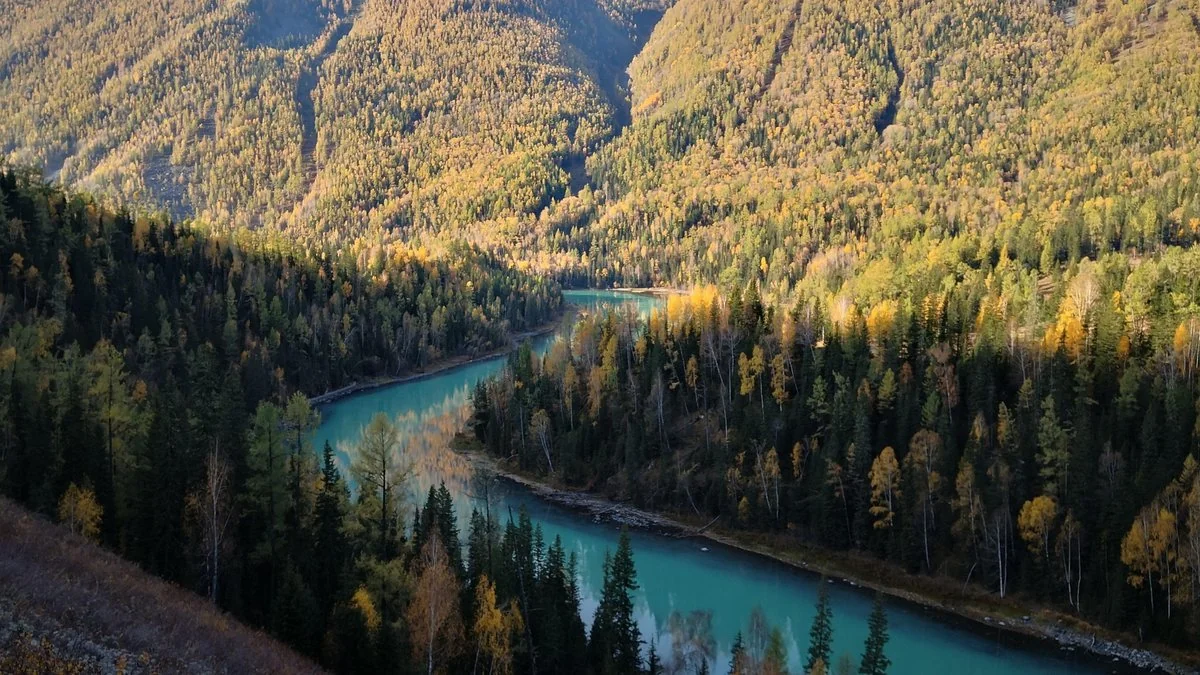
Kanas Lake lies in northern Xinjiang's Altai Mountains, right beside the tri-border zone where Russia, Mongolia and Kazakhstan all meet. Local residents break down roughly 60% Kazakh, 30% Tuvan Mongol, with tiny Hui and Han Chinese communities making up the remaining small population share.
Tuvan people treat Kanas Lake as sacred holy land central to all their spiritual customs. Local oral traditions carry countless lake monster sighting tales passed down generations; scientists explain all sightings as giant Siberian taimen trout that grow over 2 meters long underwater. Do not swim or wade into lake waters at any point—the water temperature rarely climbs above 10°C year-round, and park officials issue fines starting at ¥500 ($69) for stepping onto protected lakebed zones. Several reckless backpackers waded in just for photos before and got hit with heavy, unavoidable fines from park rangers patrolling the shoreline.
Hemu Village offers the easiest accessible Tuvan settlement, a quiet hamlet built from log cabins famous for dreamy sunrise mist shots captured from the Hemu Viewing Platform. You can ride the cable car round trip for ¥60 ($8), or tackle a steep two-hour uphill hike all the way to the viewpoint if you don't mind tough terrain. Stick strictly to marked wooden boardwalks circling the village perimeter for photos—don't cut through private cabin yards without prior clear permission from homeowners. Many foreign hikers trespassed into private yards to snap unobstructed wide shots and upset village elders deeply with their disregard for personal property.
Kazakh yurt homestays in Baihaba, a border town sitting right next to Kazakhstan: You have to submit your passport to register at the local police checkpoint 48 hours ahead of your planned visit to enter this restricted border zone at all. Under zero circumstances photograph military checkpoints, uniformed soldiers or border fence lines—security officers will confiscate cameras and detain visitors who break this critical safety rule without exception.
Horse trekking routes (the classic three-day Kanas to Hemu trail): Only book tours through Kanas Visitor Centre's official horse trekking cooperative. Independent unlicensed private guides have robbed tourists in past remote treks, while the official cooperative posts fixed transparent price lists and provides emergency location beacons for safety during multi-day remote mountain hikes with zero cell service.
Altai golden eagle cultural tradition: The annual Golden Eagle Festival takes place roughly 20km outside Burqin county town every early July. Kazakh hunters demonstrate fox and rabbit hunting with their trained golden eagles for visiting crowds. Stay a minimum of 5 meters away from perched eagles unless the bird handler gives clear verbal permission to move closer—eagle talons exert 400 psi crushing force and can seriously injure careless onlookers who get too near. Multiple tourists got too close and spooked the birds mid-festival demonstrations in past years.
Kazakh mosque prayer etiquette: If you hear the azan (Muslim call to prayer) ring out from village mosques, turn down loud music and avoid walking through mosque courtyard spaces during active prayer hours out of local respect.
Quick weather heads-up: September delivers peak golden birch foliage and the largest annual tourist crowds flooding the lake area. By mid-September, nighttime temperatures drop to -2°C, even if daytime highs hit a warm 22°C in direct sunlight. Pack a thick down parka and fully insulated winter boots regardless of warm daytime weather forecasts. Overseas visitors often wildly underestimate the brutal nighttime cold and end up freezing overnight in village homestays without proper warm layers.
Xinjiang-Altai Kazakh and Tuvan cooking centers around dairy products, mutton and hand-shaped flatbread staples adapted for cold mountain living.
Beshbarmak five-finger boiled meat: Boiled lamb or horse meat served on large shared wooden plates over soft hand-pulled noodles, eaten bare-handed with onion-shalgam sauce mixed in. If you're honored as the main guest of the table and receive the sheep's head as your portion, cut off its right ear and hand it back to the youngest child present as a traditional sign of goodwill and respect to the host family.
Kumis fermented mare's milk: 3–4% ABV fizzy drink with an intensely sharp sour flavor. Every yurt serves this as a mandatory welcome drink for all guests. If you can't stand the taste, take one tiny polite sip, thank your host sincerely, then pass the bowl clockwise around the table—never pour leftover kumis onto the dirt ground, this counts as a grave insult to your hosting family's traditions. A British backpacker dumped kumis out on the dirt floor once and ruined their entire homestay stay's atmosphere irreparably.
Kurt sun-dried yogurt curds: White or pale yellow dried yogurt chunks, tart as unripe limes. Sold everywhere in woven reed baskets—keep chewing gum handy if you plan to try these, they stick tenaciously to teeth for ages after eating. Tourist-friendly sweet honey kurt costs ¥20 ($3) per 500g bag.
Boortsog Kazakh fried dough squares: Comparable to small doughnut holes, served alongside salty milk tea at every yurt breakfast table each morning.
Large Kazakh steamed manty dumplings: Bigger and juicier than standard Chinese baozi, stuffed with lamb and onion filling. One portion of eight manty plus side vegetable salad runs ¥35 ($5) at village roadside restaurants.
Altai wild berries grow above the treeline all through August: wild blueberries, lingonberries and sea buckthorn berries ripen everywhere along hiking trails. Sea buckthorn juice sold at the Kanas visitor centre café tastes extremely sour but packs massive vitamin C content—mix in honey if you carry some to balance the sharp tartness before drinking.
Drinks available: Salty Kazakh brick milk tea, ¥10 ($1) per full pitcher, the standard daily breakfast beverage for all local villagers. Local craft beer “Altai Mountain Brew” costs ¥15 ($2) per bottle, surprisingly smooth and well-brewed for such a remote mountain production site.
Daily food budget sits around ¥130 ($18)–¥220 ($31) per person. Vegetarian options stay extremely limited across the whole lake area—stock up on dried fruit, nuts and instant noodles as backup supplies if you avoid lamb, horse meat and dairy products entirely. Many plant-based travelers struggled to fill their plates during multi-day remote treks with zero alternative meat-free dining options available along mountain trails.
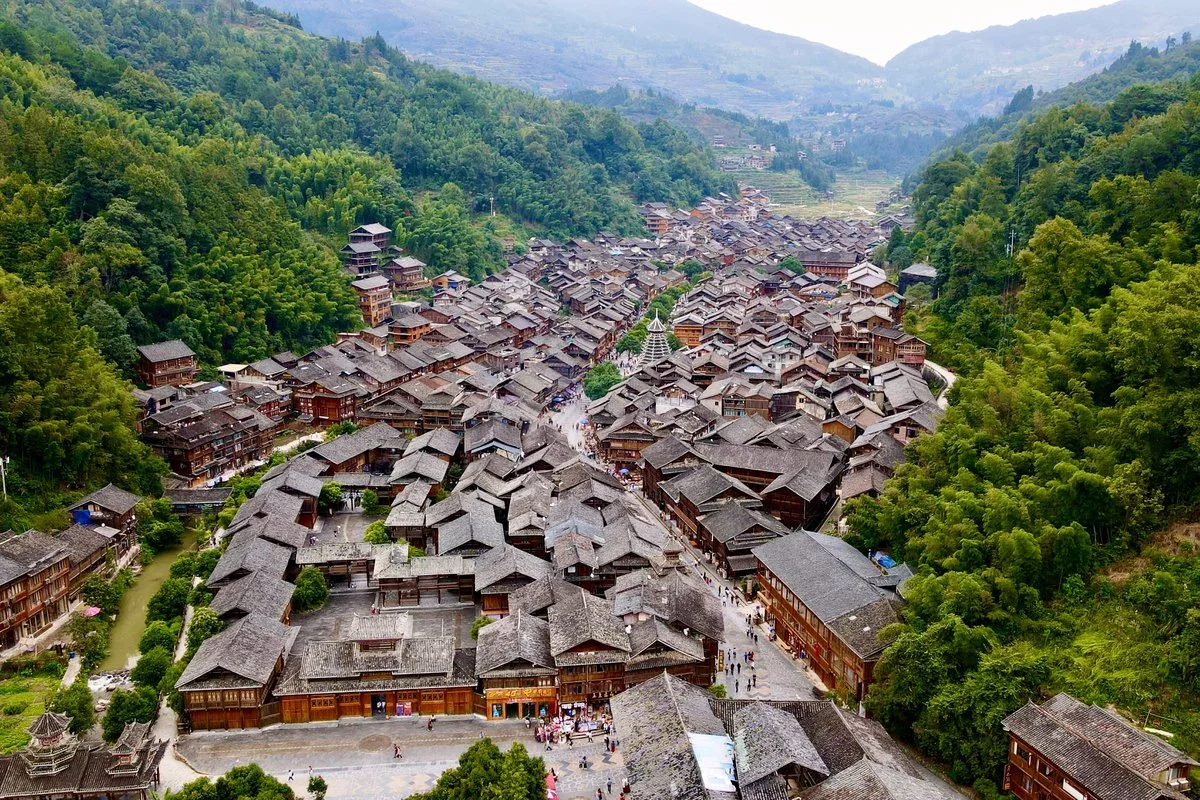
China's largest Dong village with stunning drum towers and UNESCO Grand Song.1
View Details