Pingyao Ancient City
UNESCO World Heritage site, China's best-preserved Ming Dynasty city.
View DetailsYuanyang County, Yunnan Province
The Yuanyang Rice Terraces, built over 1,300 years by generations of Hani ethnic villagers working hand-in-hand, stand as a stunning masterpiece of ancient agricultural engineering, one of China's most jaw-dropping mixed natural-cultural landscapes you'll ever lay eyes on. UNESCO designated this site a World Heritage Cultural Landscape all the way back in 2013 for its unmatched ancient farming design.
Terraces cascade down Ailao Mountain slopes starting from 2,000 meters elevation all the way down to valley floors, covering over 73 square kilometers in endless curved layered farm fields stretching as far as the eye can see. The scenery shifts drastically with each passing season: from late November through April, terrace beds fill with still calm water, acting as thousands of mirror surfaces reflecting sunrise and sunset skies perfectly—this quiet window draws landscape photographers from every continent to camp out for perfect shots. Summer turns terraces lush emerald green with growing rice stalks swaying in mountain breezes, while late September and October glow warm golden during annual rice harvest season across the hills.
Top viewing spots worth prioritizing: Bada Village for sunrise rolling over thick sea-of-cloud layers covering the valley floor, Laohuzui (Tiger's Mouth) for glowing sunset water reflections across endless terrace pools, and Duoyishu, home to the most famous wide panoramic terrace shots you'll see all over travel social media online. Local Hani people, living in distinctive mushroom-shaped thatch homes with intact age-old customs, form an inseparable living working part of this active agricultural landscape year-round. A French landscape photographer said winter's water-filled terrace mirror reflections beat every rice terrace location they visited across Southeast Asia hands down.
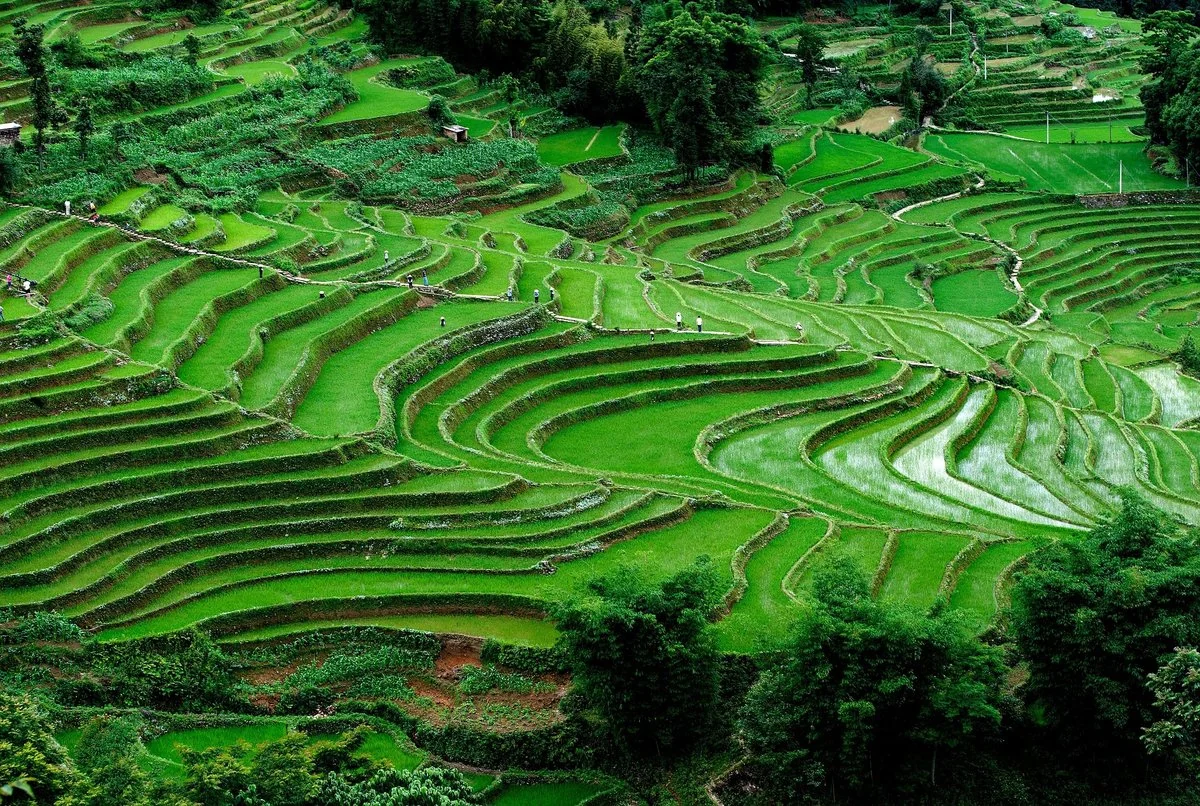
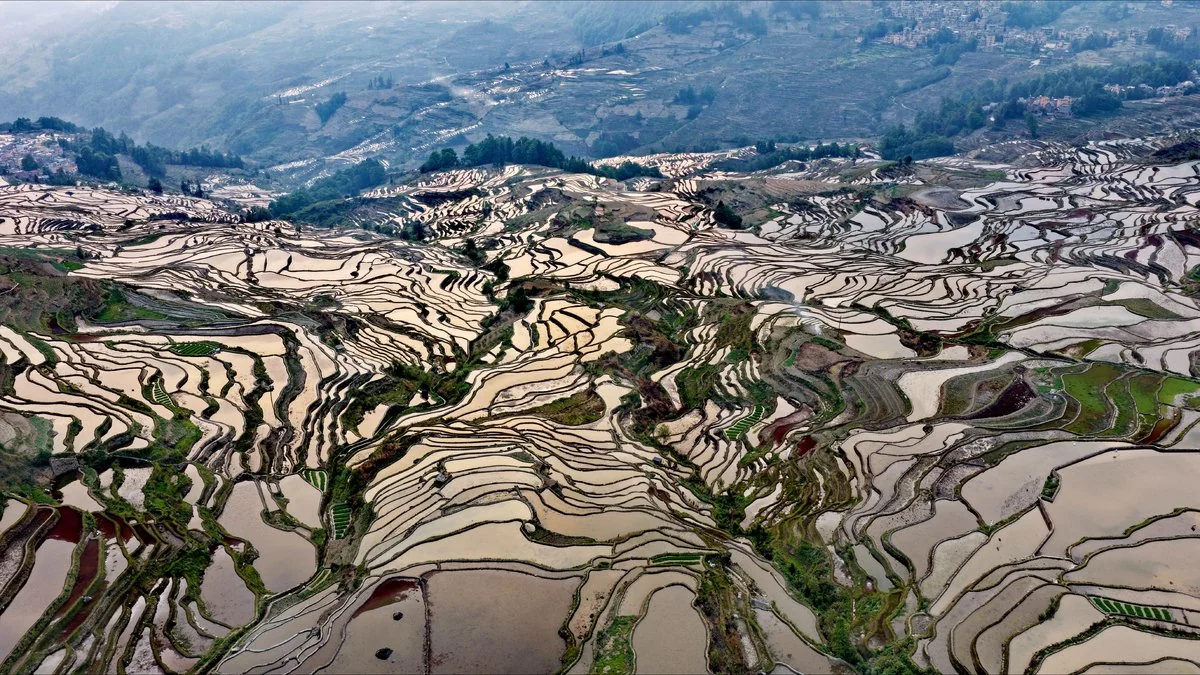
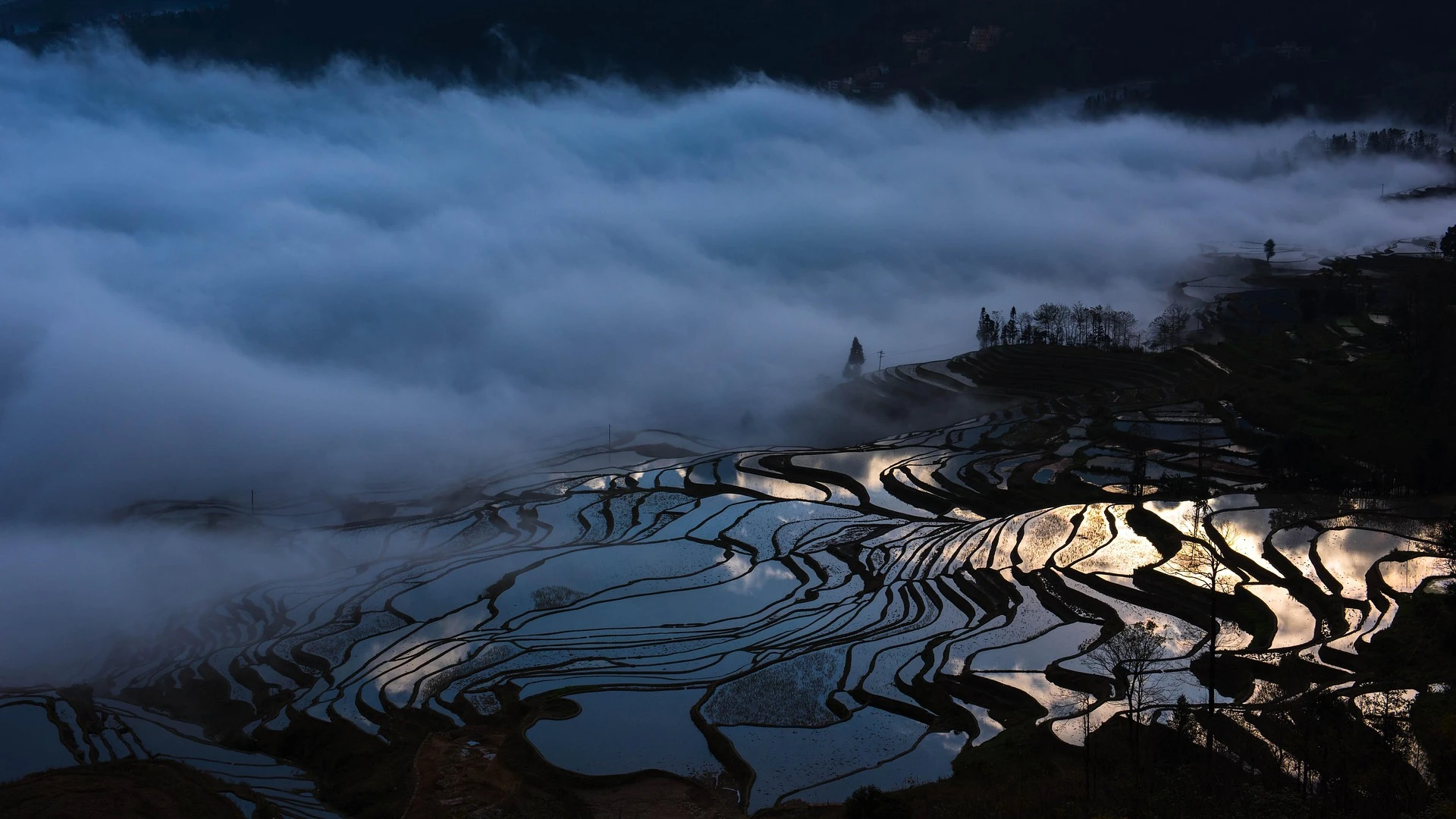
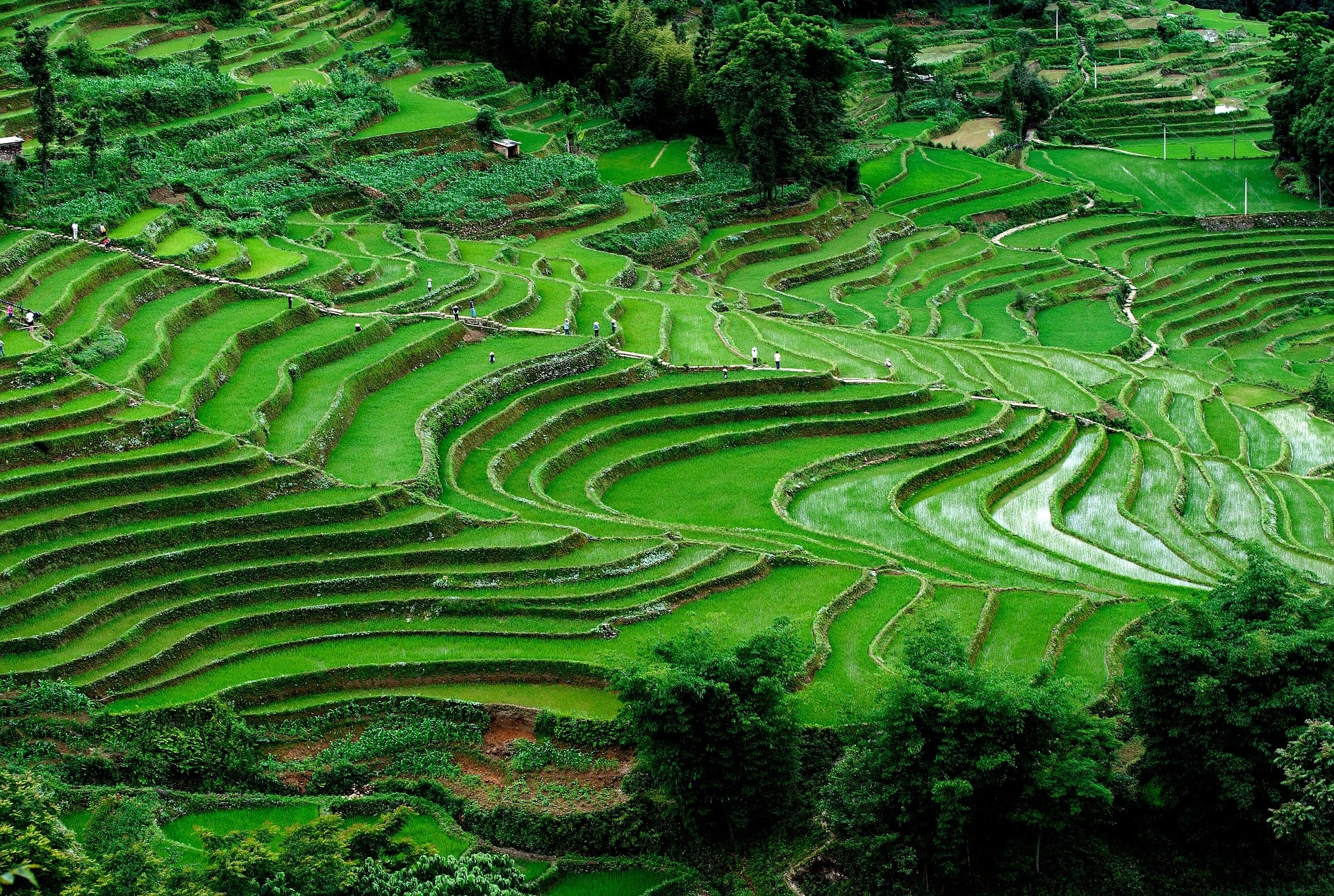
Yuanyang serves as the heartland of the Hani ethnic minority, who built the massive terrace gravity irrigation system over 1,300 years relying purely on natural mountain spring water flow without any modern pumps. UNESCO recognized it as a Cultural Landscape officially in 2013 for its unique human-nature integrated farming design.
Hani water buffaloes used to plough flooded terraces get treated like beloved family members, not disposable farm livestock to locals. Don't shout, wave wide-brimmed hats or make sudden jerky movements near buffalo working in water-filled fields—they spook easily and can charge at visitors without warning if startled. Multiple foreign tourists waved cameras too close to grazing buffalo before and triggered them to stampede straight toward the crowd of sightseers.
Longshuba village Mushroom Houses: Traditional Hani thatch-roof homes shaped exactly like wild forest mushrooms, many still fully occupied by local families, especially upper-floor living quarters. Walk quietly past open doorways; if villagers invite you inside for tea, always accept graciously—Hani hospitality runs extremely deep, and you'll almost certainly get offered smoked mountain tea and homemade brown sugar snacks as soon as you step inside their homes.
Sunrise photography insider hack: The classic Duoyishu viewing platform fills up two full hours before sunrise during winter's peak water-reflection season (December–February). Tripods hog huge amounts of standing space on the main deck, so if you arrive past 4:30am in peak season, skip the crowded main viewing area and walk ten minutes left along the lesser-known “Bamboo Gully” footpath for unblocked wide-angle shooting spots with zero crowds blocking your frame. Many overseas photographers wasted hours stuck packed behind massive crowds on the main platform with no clear shot of the terraces at all.
Hani village elders—usually men over 65 wearing signature black Hani head wraps—often gather at village stone wells to chat together every morning. Offering a cigarette acts as a friendly conversation opener if you want to chat with them; smoking holds traditional respect meaning between Hani adult male villagers.
Hani Long Street Banquet: Held yearly on the fourth lunar month (late April /early May) for the Kuzhazha Festival. Villagers line over 1,000 wooden tables end-to-end down the main village street for a massive shared feast open to limited tourists. Tourist entry tickets cost ¥180–280 ($25–$39), strictly limited to just 200 guest spots per year—book one month in advance or miss out entirely with no waitlist available for sold-out dates. Several international travelers arrived last-minute and found all tickets fully gone with zero way to join the banquet celebration.
Drone flight strict local rules: No flying drones over terrace fields between 06:00–09:00 and 17:00–19:00 daily. Farmers actively chase drones away because they scare young water buffalo calves and damage tender young rice shoots growing in shallow terrace water. You can buy an official daily drone flight permit from the Yuanyang Scenic Area Management office for ¥300 ($42) if you want to fly outside restricted hours.
Local folk superstition to note: Avoid whistling inside terrace fields after dusk. Hani farmers firmly believe whistling disturbs rice spirits guarding the crop, which will bring poor harvests the following farming year. Locals won't directly confront you over this habit, but they'll view your behavior as rude and deeply disrespectful to their entire farming livelihood they rely on to survive.
Hani cooking relies on a massive range of wild edible mushrooms and foraged mountain greens, following a simple local village saying: “If it grows and isn't poisonous, we eat it.”
Hani grilled chicken: Free-range local chicken marinated in wild ginger, lemongrass and Sichuan peppercorn oil, grilled slowly over pine branches cut fresh from mountain forests. Every mushroom village guesthouse serves this dish, roughly ¥80 ($11) for a whole bird, paired with three unique handmade dipping sauces mixed from wild mountain herbs.
Yunnan Crossing-the-Bridge Noodles: Yuanyang's regional twist adds wild forest matsutake mushroom slices (only in season July–October) and tender bamboo shoot tips to the classic broth. Premium restaurant set meals cost ¥68 ($9) per person, while street stall versions with fewer toppings run ¥18 ($2).
Wild mushroom hotpot: Simmer five to seven varieties of seasonal mountain mushrooms (porcini, chanterelle, matsutake, black fungus, velvet shank, shifting with seasons) in slow-cooked pork bone broth. Wait for the kitchen timer to finish fully before eating—undercooked wild mushrooms carry severe poisoning risks that can ruin your whole trip. Licensed Xinjie town restaurants displaying the “wild mushroom official catering” certificate charge ¥160–220 ($22–$31) per person; skip unlicensed roadside stalls entirely, no matter how cheap they look. A foreign tourist once ate unregulated wild mushrooms at an unmarked stall and suffered severe stomach illness mid-trip, ruining their whole holiday schedule for days afterward.
Pickled broad beans cooked with yellow rice: A staple daily Hani home dish, steamed with cured bacon fat and eight types of wild mountain herbs picked fresh each morning, ¥15 ($2) per plate at family-run village eateries.
Bamboo-tube rice: Young glutinous rice stuffed inside fresh green bamboo tubes and roasted over charcoal fires; the thin inner bamboo layer turns into an edible sweet film coating every rice grain. Sold at all sunset viewpoint car parks for ¥15 ($2) per tube.
Snack special limited stock: Kuzhazha rice cakes, dark purple herb-infused rice cakes made using twelve wild mountain herbs, only available late April and May during the Kuzhazha Festival, sold from bicycle carts rolling through village streets each morning.
Drinks: Smoked pine tea, pine-smoked inside bamboo tubes, a signature Hani specialty you can't find anywhere else. Grab a 250g block from Xinjie tea shops for ¥120 ($17). Nearby Pu'er region produces small-batch Yunnan Arabica coffee, ¥25 ($3) per cup at town cafes. Homemade rice wine brewed in every household, hitting 12% ABV, ¥20 ($1) per one-litre plastic bottle to take back as a souvenir.
Daily food budget lands around ¥80 ($11)–¥150 ($21) per person. Vegetarian travelers thrive here—roughly 60% of classic Hani dishes center on wild vegetables, mushrooms and tofu without any meat ingredients mixed in at all.
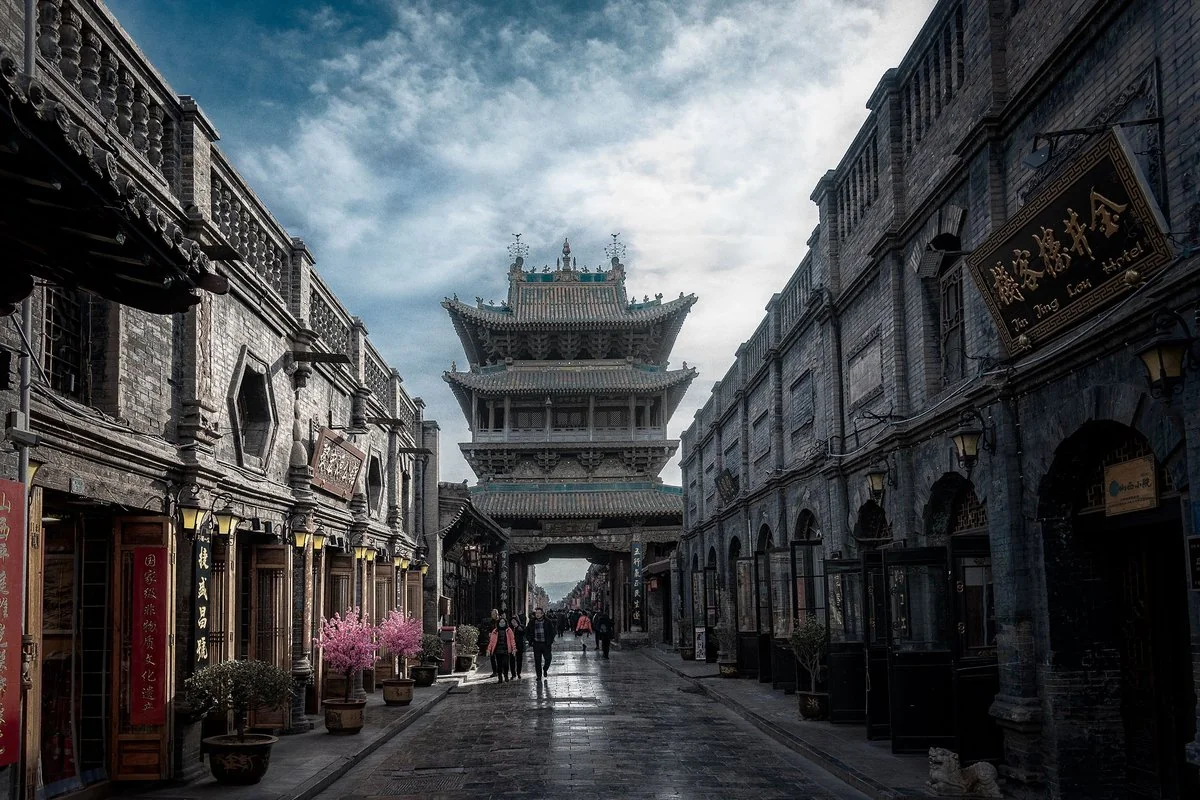
UNESCO World Heritage site, China's best-preserved Ming Dynasty city.
View Details
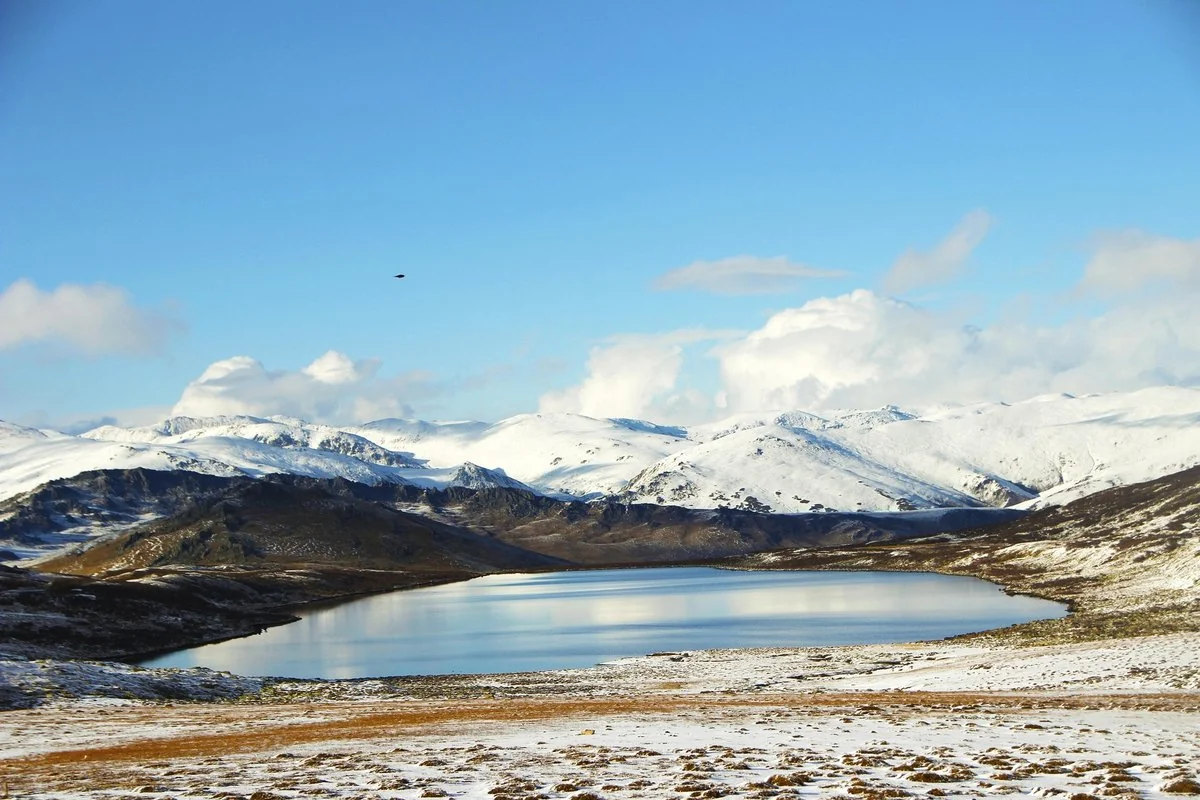
Stunning alpine lake in Altay Mountains, known for its color-changing waters.
View Details