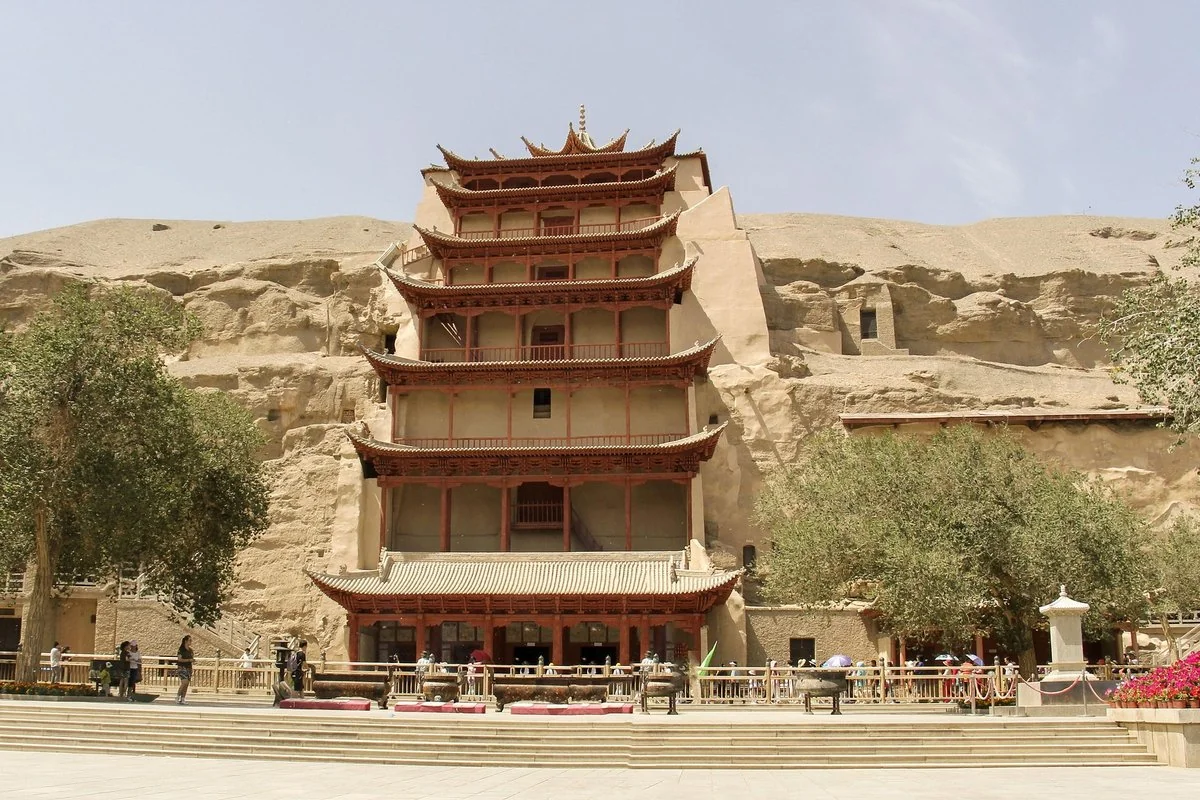
Mogao Caves
UNESCO World Heritage Buddhist art treasury with 492 painted caves.
View DetailsEjina Banner, Inner Mongolia Autonomous Region
Ejina Poplar Forest sits in western Inner Mongolia's endless Gobi Desert, home to China's most breathtaking autumn foliage scenery every single year. Every late September through mid-October, desert poplar trees (Populus euphratica) burst into vivid golden yellow foliage, creating an otherworldly landscape of shimmering gold leaves against bright blue cloudless skies and rust-red desert sand dunes stretching endlessly in every direction.
Local folk legends celebrate the poplars' insane natural resilience: the trees live a full thousand years, stand upright for another thousand years after dying, and remain intact without rotting for a third millennium afterward once dead. The forest stretches over 38,000 hectares lining the Ejin River, a lush green oasis buried within endless rolling Gobi sand hills as far as the eye can see.
Different zones deliver totally separate travel vibes for photographers: First Bridge holds the oldest, most photogenic mature poplar trees with thick gnarled twisted trunks perfect for close-up shots. Second Bridge features calm still river reflections ideal for sunrise landscape shooting without wind ripples ruining frames. Strange Forest (Guai Lin) displays weathered dead tree trunks rising bare from flat bare sand, crafting eerie, alien desert scenery ideal for artistic portrait photoshoots. You can also visit the ancient Black City Silk Road fortress ruins nearby for history-focused sightseeing off the beaten photography trail. A German landscape photographer traveled 4,000km specifically to shoot Ejina's golden poplar autumn, calling it unlike any fall foliage spot anywhere on planet Earth.
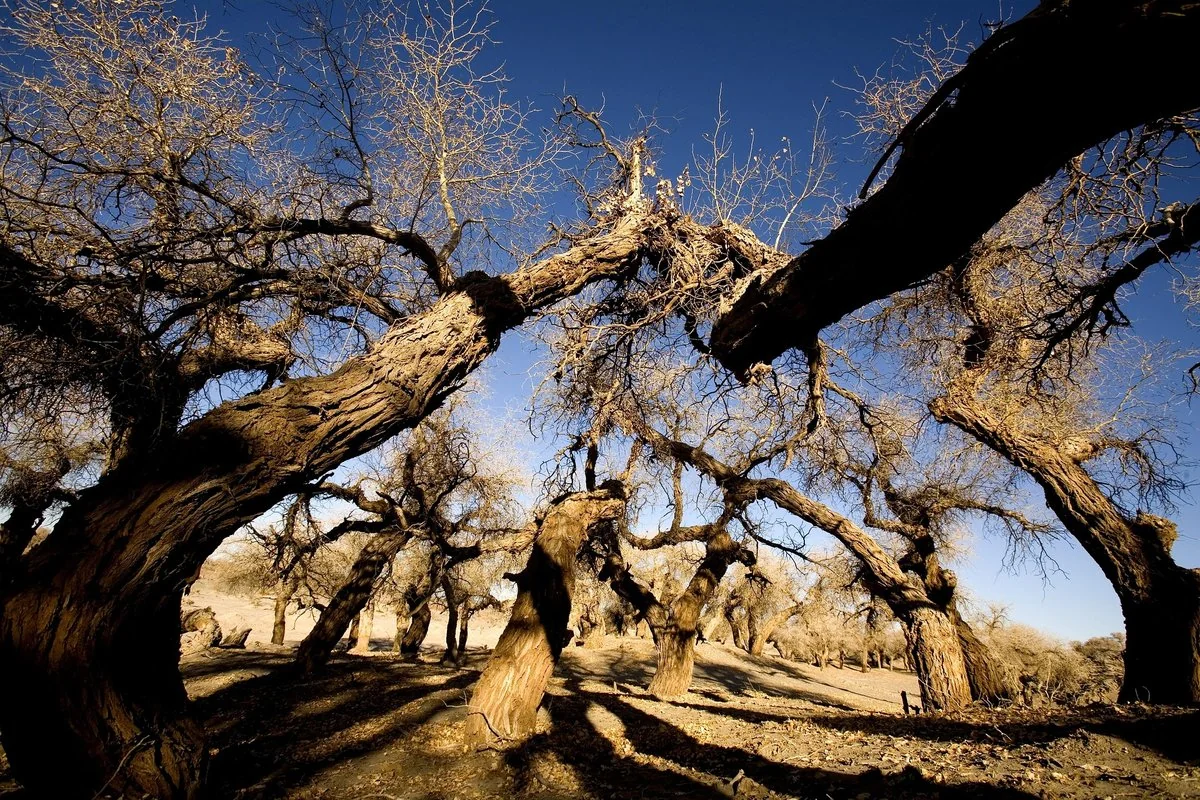
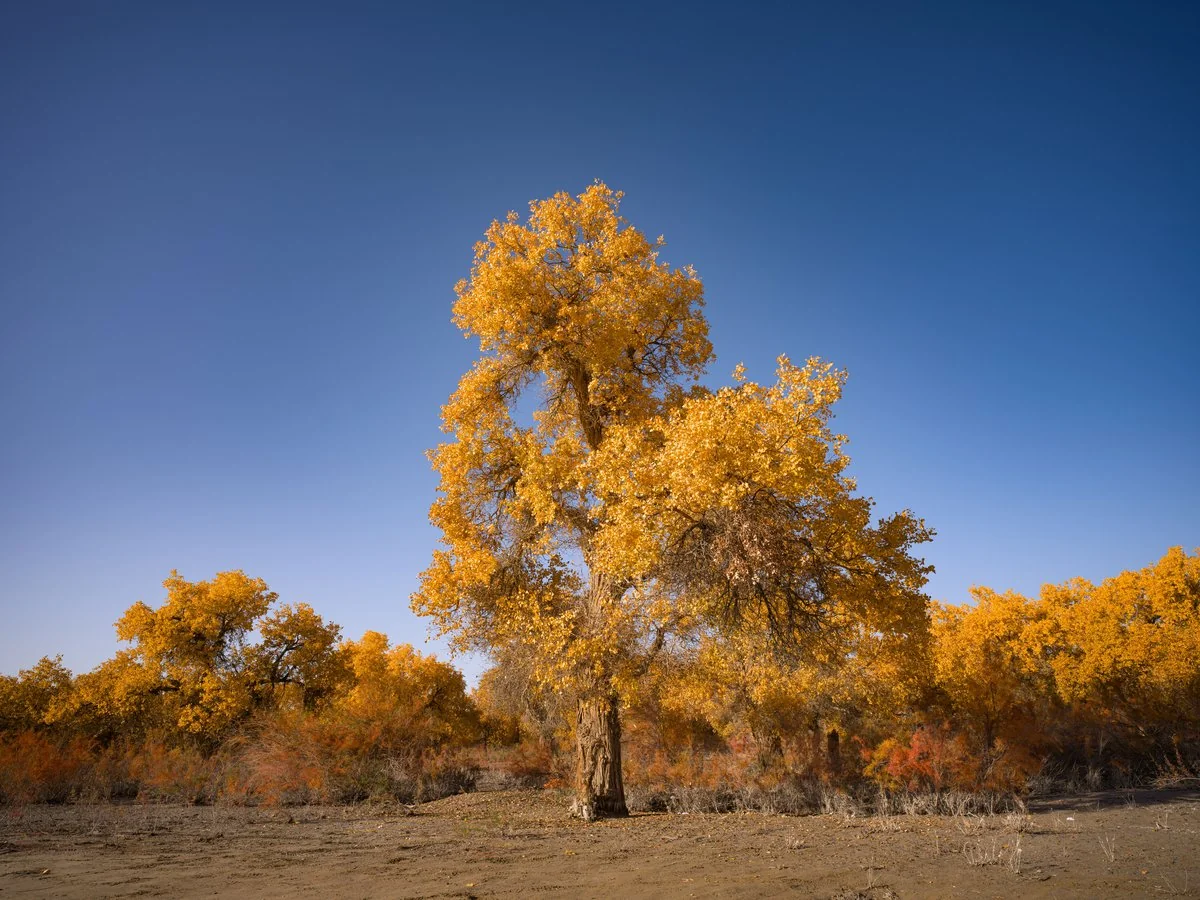
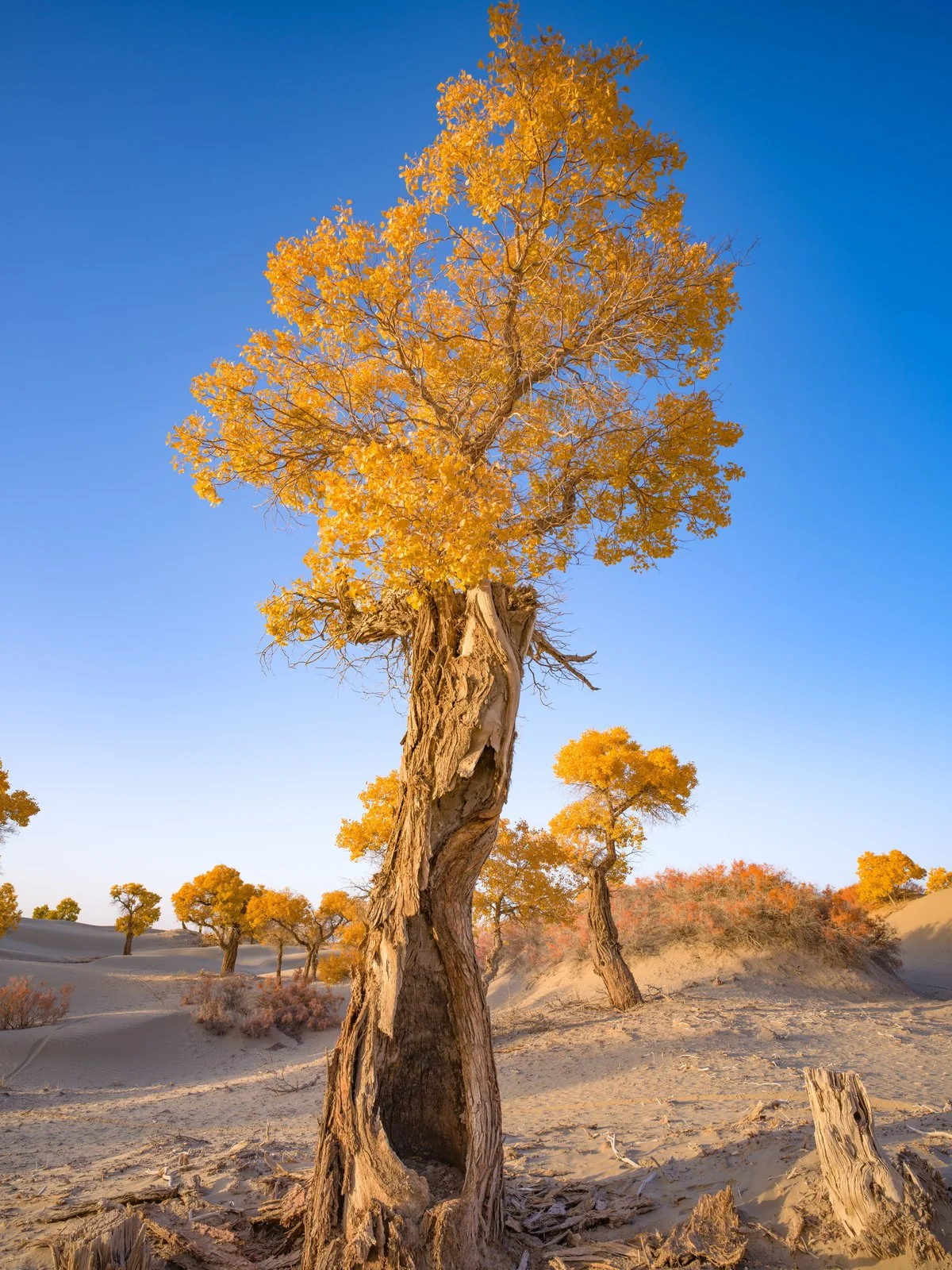
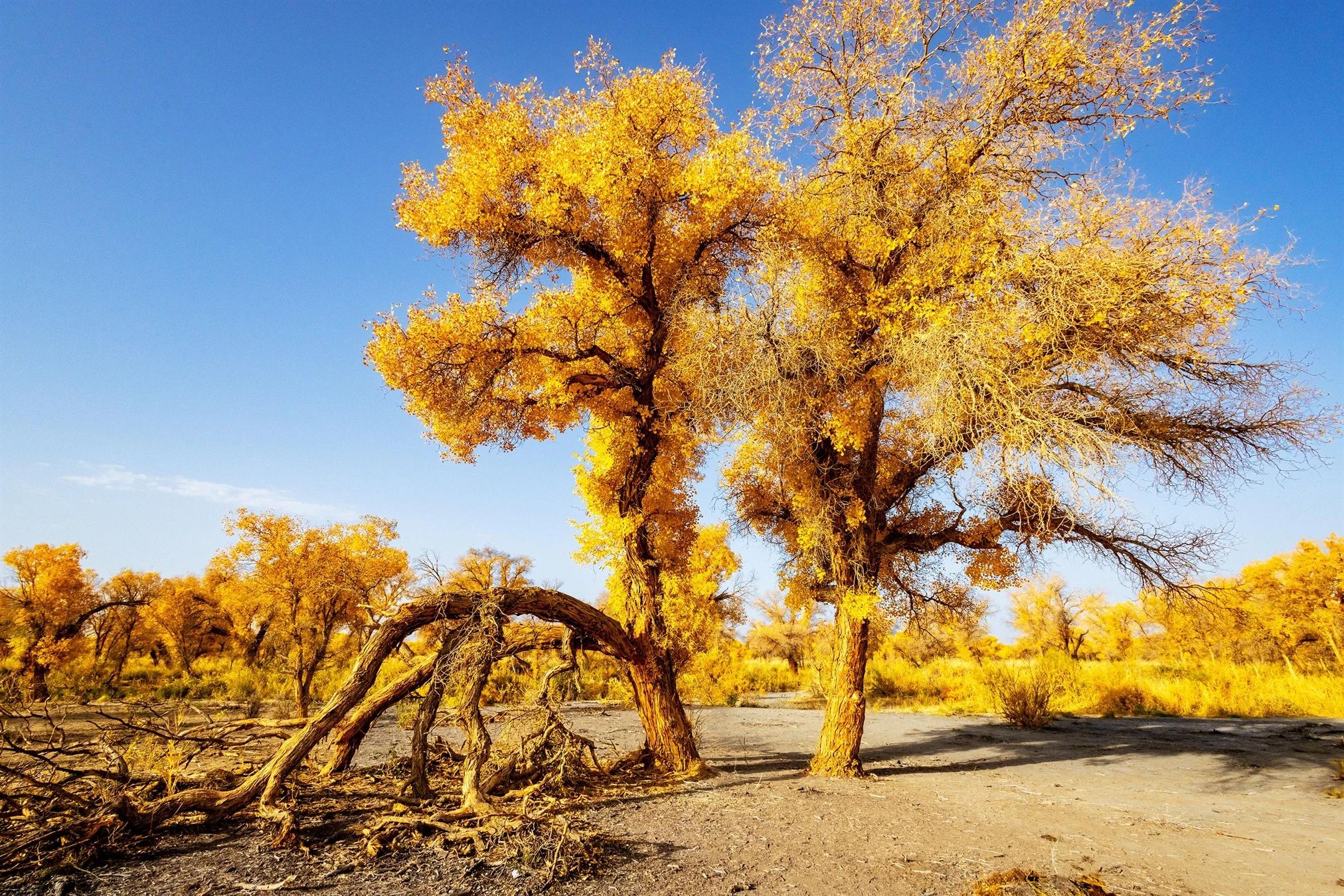
Ejina Banner sits in westernmost Alxa League of Inner Mongolia, home primarily to Torgut Mongols, descendants of the famous 1771 “Return of the Torghuts” mass migration back from Russia's Volga region—one of history's most legendary nomadic homecoming journeys that every local elder will happily tell you stories about.
Ejina poplar forests form the world's largest intact desert poplar woodland. Trees turn pure golden for roughly twenty days annually, peaking October 5–25 every single fall without fail. Photography hard rule you can't ignore: Stick strictly to marked wooden boardwalks for shooting—rangers patrol seasonally with over 200 staff on rotation, issuing ¥500 ($69) fines to anyone stepping off paths onto hard-baked desert crust. Damaging this fragile dry crust triggers irreversible soil erosion that kills poplar root systems permanently, destroying the forest landscape forever. Many foreign photographers cut across unmarked sand to get closer tree shots and received steep, unavoidable fines from patrolling rangers during peak autumn season.
Mongolian yurt homestays in the “10 Mile Desert Poplar” zone greet every guest with a soft blue silk hada scarf and a bowl of airag fermented mare's milk as a welcome ritual. Accept the hada using both hands, bow slightly toward your host, then drape it gently around your neck before sipping the mare's milk drink as custom demands to avoid seeming rude.
Badain Jaran Desert jeep safari tours: Only ride with licensed drivers displaying the official Ejina Tourism windshield badge clearly on their vehicle. Unlicensed cheap private drivers often break down deep in remote dunes, with zero cell service or emergency radio access to call for help—summer temperatures hit 45°C, making vehicle breakdowns potentially life-threatening for stranded visitors with no water supplies.
Khara-Khoto Black City ruins: A Western Xia dynasty fortress Marco Polo visited in 1275 during his Silk Road travels across Asia. Russian explorer Pyotr Kozlov looted over 30,000 Tangut manuscripts here between 1907–1909; most precious artifacts stolen back then now reside in St. Petersburg's Hermitage Museum overseas. Climbing crumbling earthen ruin walls is fully banned, as the ancient mud ramparts collapse easily under foot traffic weight from visiting tourists.
Juyan Lake sunrise viewing area: Boardwalks lined with reeds and migratory bird viewing spots fill up completely by 5:30am during golden autumn week. Bring binoculars if you plan birdwatching—over 30,000 migratory species pass through the lake each early October to rest and feed before continuing their migration south.
Desert survival quick reminders: Drink at minimum four litres of water daily even if you don't feel thirsty or sweaty from walking the sand. Grab a lightweight shemagh headscarf from local supermarkets for ¥30 ($4) to shield your entire face during sudden sandstorms rolling across the dunes with zero warning. SPF 50 sunscreen isn't optional here—desert UV radiation burns skin rapidly with zero cloud cover for shade all day long. Never wander more than 50 meters from your vehicle or clearly marked trails in dunes without GPS navigation; identical rolling sand hills disorient travelers within five minutes flat, making it easy to get lost. Multiple backpackers got lost wandering off-trail without GPS and required ranger rescue teams to track them down safely.
Mongolian yurt etiquette basics: Step over the wooden threshold beam when entering a yurt—never step directly onto the beam itself, it's seen as a bad luck omen for the host family. Don't lean against the central wooden support pillars inside; these pillars symbolize the sacred world tree in Mongolian shamanism, often wrapped in blue silk hada cloth as devotional offerings left by visiting pilgrims.
Mongolian local cuisine leans heavy on mutton, dairy and grain staples, with Ejina's regional recipes carrying extra Silk Road caravan spice influences compared to eastern Inner Mongolian cooking styles closer to major cities.
Hand-stripped lamb: The number one unmissable local dish—four-hour slow-boiled Gobi fat-tailed sheep meat eaten straight off bones with garlic-vinegar dip and wild pickled shallots on the side. ¥150 ($21) per kilogram, enough food for two guests plus two side vegetable dishes to share. Head to town's “Mongol Khan Restaurant” for certified local fresh lamb, avoid random street vendors selling frozen imported mutton shipped in from other provinces.
Mutton dumplings boiled in iron pots: Thirty large handmade dumplings per serving for ¥48 ($7), served alongside rich lamb soup broth on the side for dipping dumplings into.
Buuz steamed lamb buns: Steamed lamb and spring onion buns, bigger and juicier than standard Chinese baozi, a staple breakfast food priced ¥25 ($3) for eight pieces every morning.
Khuushuur deep-fried lamb pastry pockets: Perfect portable hiking snacks for long dune treks across hot sand, ¥4 ($1) apiece from street bakeries lining the main town road.
Dairy options widely available: Airag fermented mare's milk (3% ABV fizzy sour taste), Tarag yak sour cream yogurt, Byaslag dried hard cheese blocks, boortsog fried dough pastries sold everywhere. Pair sharp dried cheese with salty milk tea to balance its intense tartness if you find the cheese overwhelming to taste alone.
Ejina cantaloupe melons: Grown in mineral-rich desert alluvial soil, hitting 15% sugar content—widely recognized as China's sweetest melon variety grown anywhere in the country. Grab a full 5kg melon from roadside farm carts for just ¥20 ($2). Local red dates and dried goji berries also grow abundantly across the oasis river banks running through the poplar forest zone.
Desert energy pick-me-up: Instant Mongolian salty milk tea powder sold at visitor centres all year round. Mix three scoops with 500ml hot water for a 500-calorie drink that sustains energy levels for four hours trekking through blistering hot sand dunes with no food stops available.
Daily food budget runs roughly ¥110 ($15)–¥200 ($28) per person. Vegetarian travel options are extremely limited—only one dedicated vegetarian restaurant exists within the entire Ejina Banner town area. Most homestays can prepare custom noodle-and-vegetable meals if you notify them one day in advance before arrival. Many vegan backpackers struggled to find suitable meat-free food without pre-planning their meals ahead of time before arriving in the desert town.
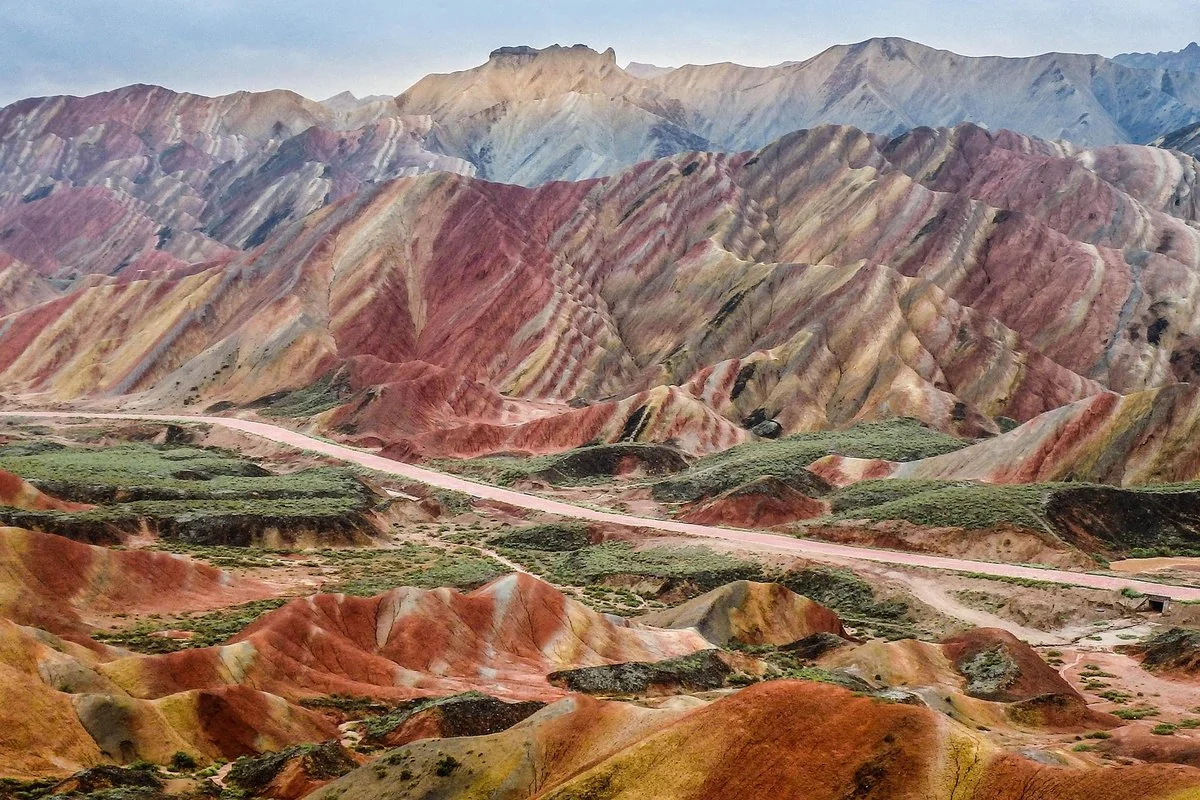
Rainbow-colored rock formations that look like a painter's palette.
View Details